
Worldwide program management.
Anchor Resource Group coordinates multi-site recycling and waste programs through independent local operators. Service standards, documentation and commercial terms are defined for the participating markets and sites.
Request a program review
Start with your sites, not a template.
One coordinated program connects the local operating requirements at each participating location.
Multi-site planning starts with the dock.
Your assessment reviews each site's materials, current services, equipment and operating constraints. We identify where schedules, container sizes or disposition rules do not match what your team handles.
Operators are reviewed for permits, insurance, facility standards, weighing and reporting. Coverage is confirmed by market before a program is agreed, including applicable state and local requirements.

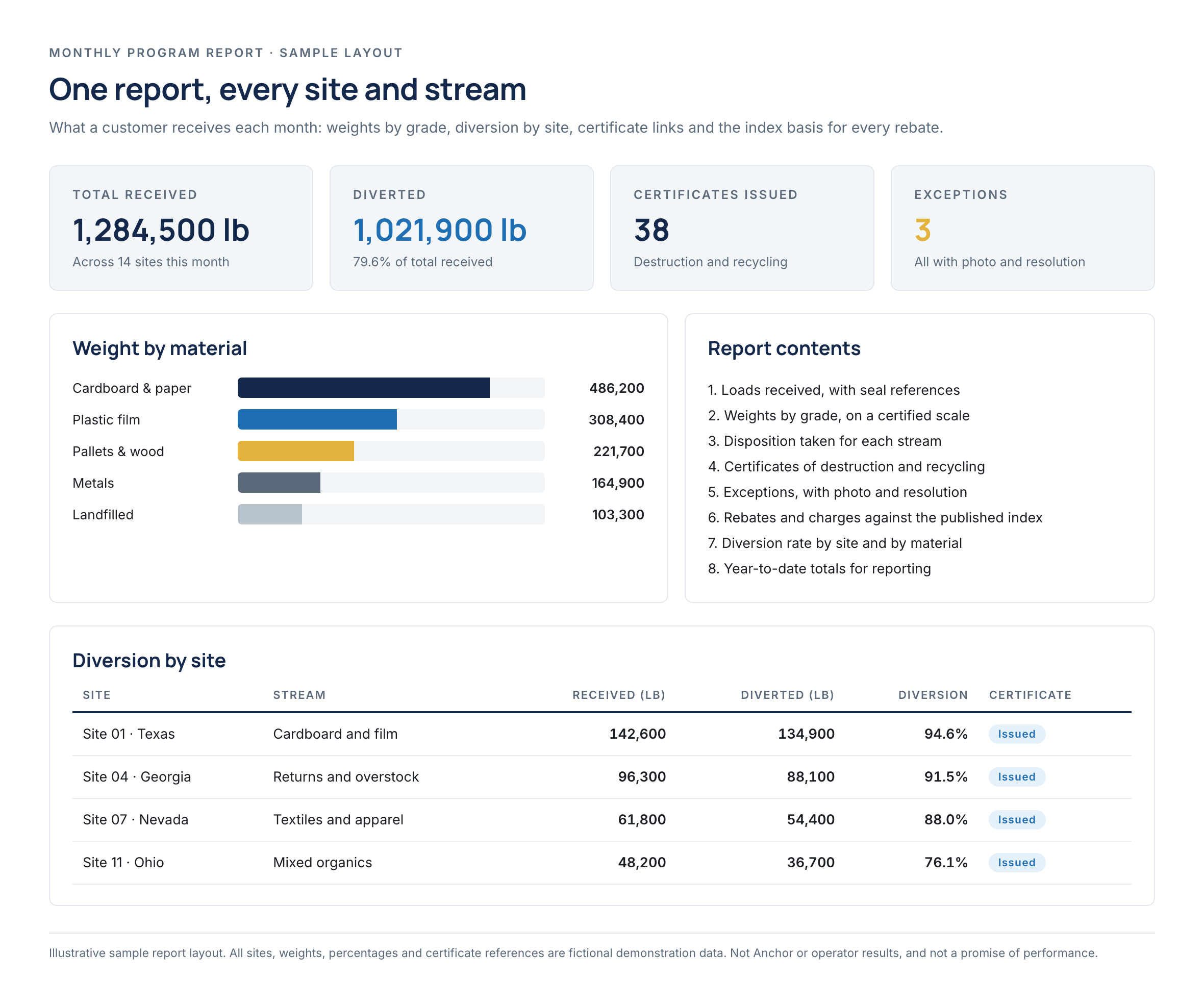
Service standards and reporting by site.
Site standards can cover materials, dock access, collection instructions, load references, reporting basis and approved disposition rules. They are set for each participating market rather than assumed across all locations.
Agreed reports organize service records by site, stream and location. They can connect weights, instructions, certificates when applicable, and documented exceptions to the relevant service.

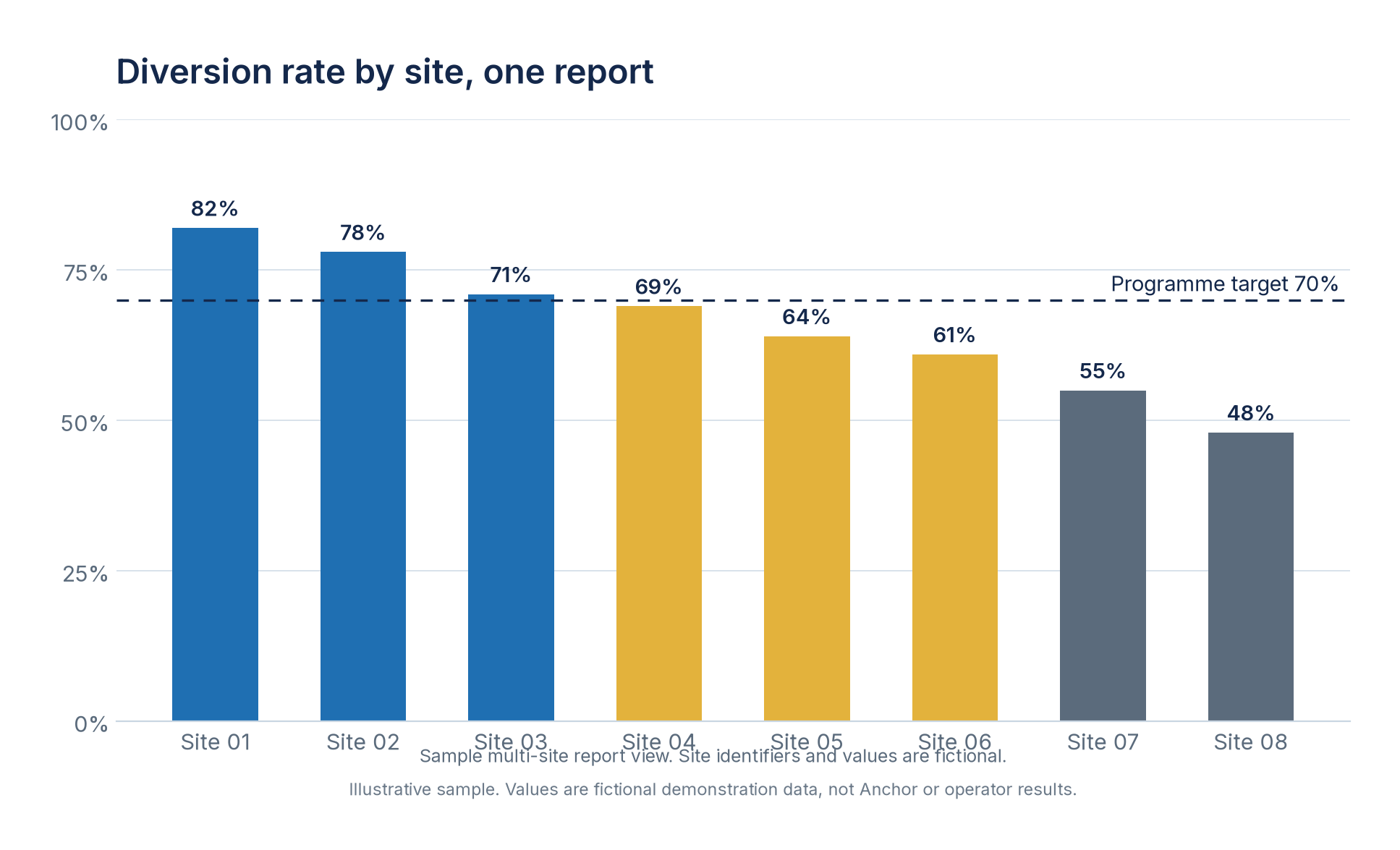
Commercial oversight without blended assumptions.
Anchor coordinates scheduling, operator oversight and consolidated billing under the program agreement. Commercial terms identify site and stream pricing, local charges, potential value where applicable and agreed adjustments.
Contract reviews can compare the economics by stream and location so differences in service, transport and outlets remain visible. No common price or recovery value is assumed across markets.

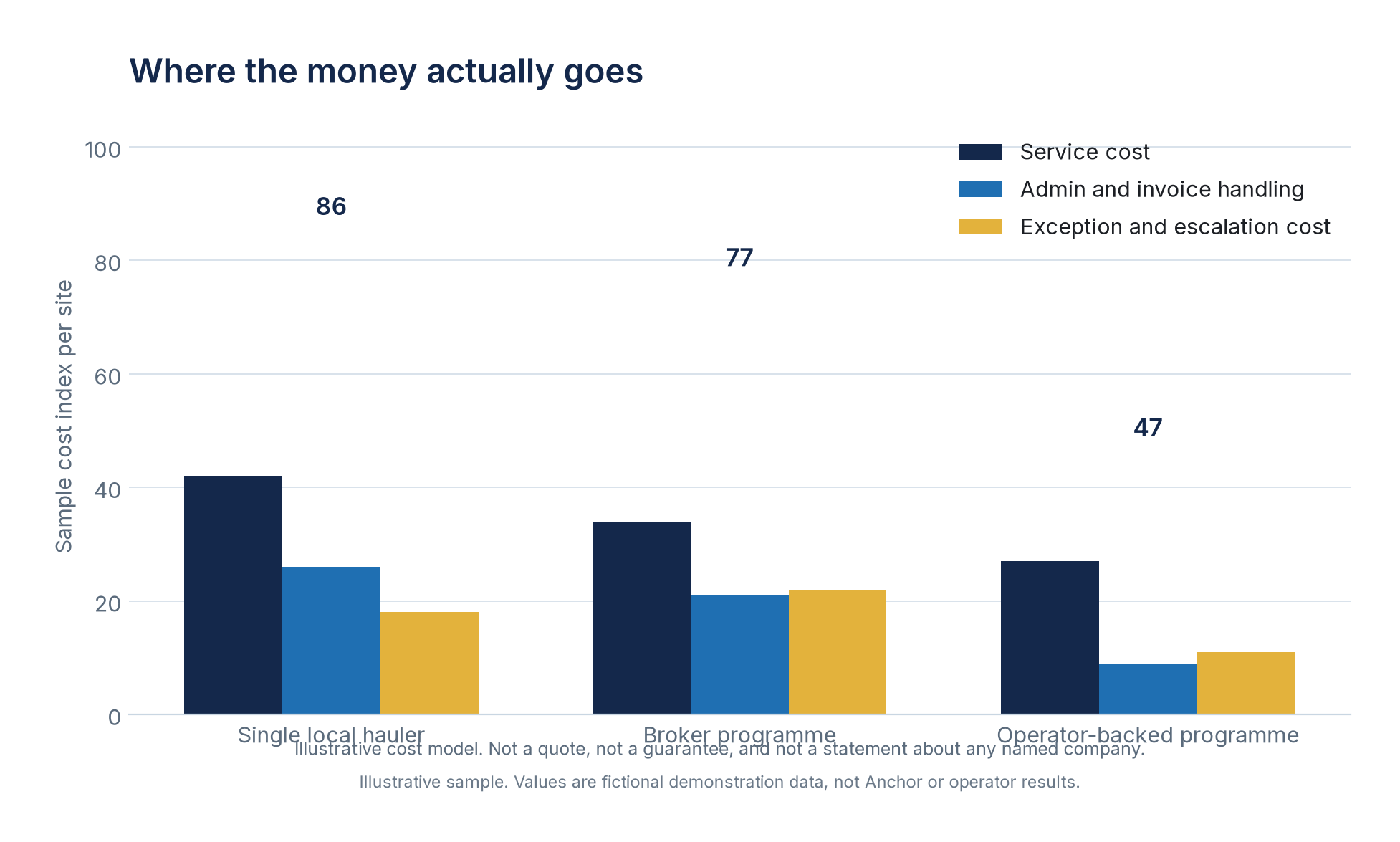
Program issues follow the agreement.
Anchor coordinates an issue review with the site and the independent executing operator. The operator addresses the work it performed. The issue is logged with the relevant site or load reference, evidence and required approvals.
Any exception and its resolution follow the program agreement. A change to the agreed service or disposition instruction is not treated as an undocumented operator decision.

| Broker | Hauler | Operator-backed manager |
|---|---|---|
| Coordinates provider contracts | Performs collection locally | Coordinates programs with operating experience |
| Network depends on agreement | Coverage depends on service area | Coverage verified market by market |
| Documentation varies | Service records vary | Connected custody and reporting requirements |
Resources for your next decision.
Running a multi-site recycling program across states: the operator vetting checklist
A practical checklist for vetting permitted recycling operators across states, protecting chain of custody, data quality, and buyer confidence.
Read the guide Program managementWhat is a waste broker, and how is an operator-backed program manager different?
Learn what a waste broker does and how an operator-backed program manager helps multi-site buyers coordinate service, records, and decisions with confidence.
Read the guideClear answers
What you should know.
Do you own trucks or processing facilities?
Anchor brings hands-on operating experience to program design and oversight. Services are performed by independent, permitted operators under the agreed program requirements.
Can you work with an existing local operator?
Your assessment can include existing providers. Any operator must meet the program's verification, service and documentation requirements before participation is agreed.
Is every location priced the same?
Not necessarily. Transport, available outlets, contamination and equipment needs vary by market. Your agreement identifies site and stream pricing so you can compare it.
How is our material protected from pickup to final disposition?
Start with written material and disposition instructions. Your agreed scope defines the pickup reference, seal control, receiving checks, weights, approved destination, processing evidence and exception escalation. Each handoff needs a responsible party. A seal alone is not proof of destruction.
How are operators vetted before our material is assigned?
Research and document review cover the legal entity, permits and accepted materials, insurance, facility capabilities, scale/reporting practices and customer requirements. An Anchor facility-management team must visit and audit the facility in person before final vendor approval. A portal application or uploaded certificate is not approval.
What insurance evidence should procurement request?
Request current evidence for the actual entities performing transport and processing, including applicable general liability, commercial auto, workers compensation, cargo or transit and pollution coverage. Limits, exclusions, insured activities, territory and required endorsements must fit the job. A certificate of insurance is evidence, not the policy or an automatic guarantee of coverage. Ask our team to confirm the relevant documentation before release.
Are Anchor and all operators bonded?
Do not assume blanket bonding. If your contract requires a bond, identify the obligation, amount, obligee, surety, term and claim conditions. The required instrument and availability must be confirmed for that contract before work is authorized. A surety bond and liability insurance do not provide the same protection.
Will we receive a complete audit package?
Define the required records up front: pickup and seal reference, receiving check, scale weights, disposition record, agreed certificate contents and unresolved exceptions. Your reporting requirements can connect them by site, material and reporting period. Sample reports on this website are fictional layouts, not evidence of a completed customer job.
How are international movements handled?
State the origin, destination, material classification, intended recovery or destruction and relevant volumes. Applicable import/export, transport and facility-acceptance requirements need review for each jurisdiction before arrangements are confirmed. A worldwide inquiry is not proof that every route or material is permitted.