
Material recovery with clear economics.
Material recovery starts with an outlet that fits the material and its condition. Anchor coordinates independent local operators and itemized records for the streams accepted in your program.
Request a program review
A real outlet for the actual material.
Grade, preparation and local requirements are checked before a recovery path is agreed.
Confirm the outlet before collection.
Each proposed recovery path is reviewed by material grade, condition, preparation, local handling requirements and outlet availability. A stream is not treated as recoverable in every market or condition.
Anchor coordinates the program, and independent executing operators perform the scoped service. If a proposed outlet, grade or condition changes, the exception is logged with evidence and required approval before the program instruction is changed.

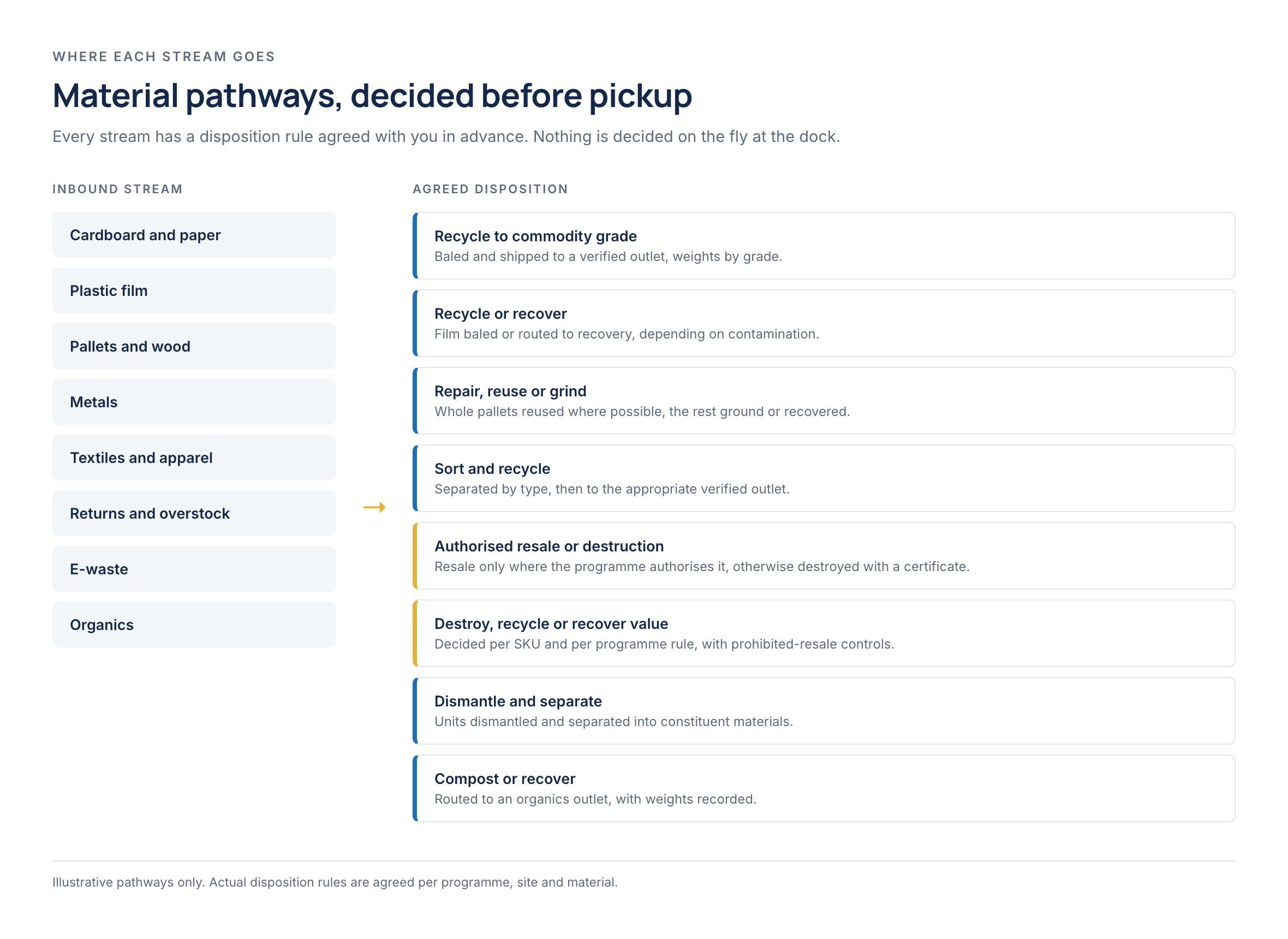
Economics by stream, not assumption.
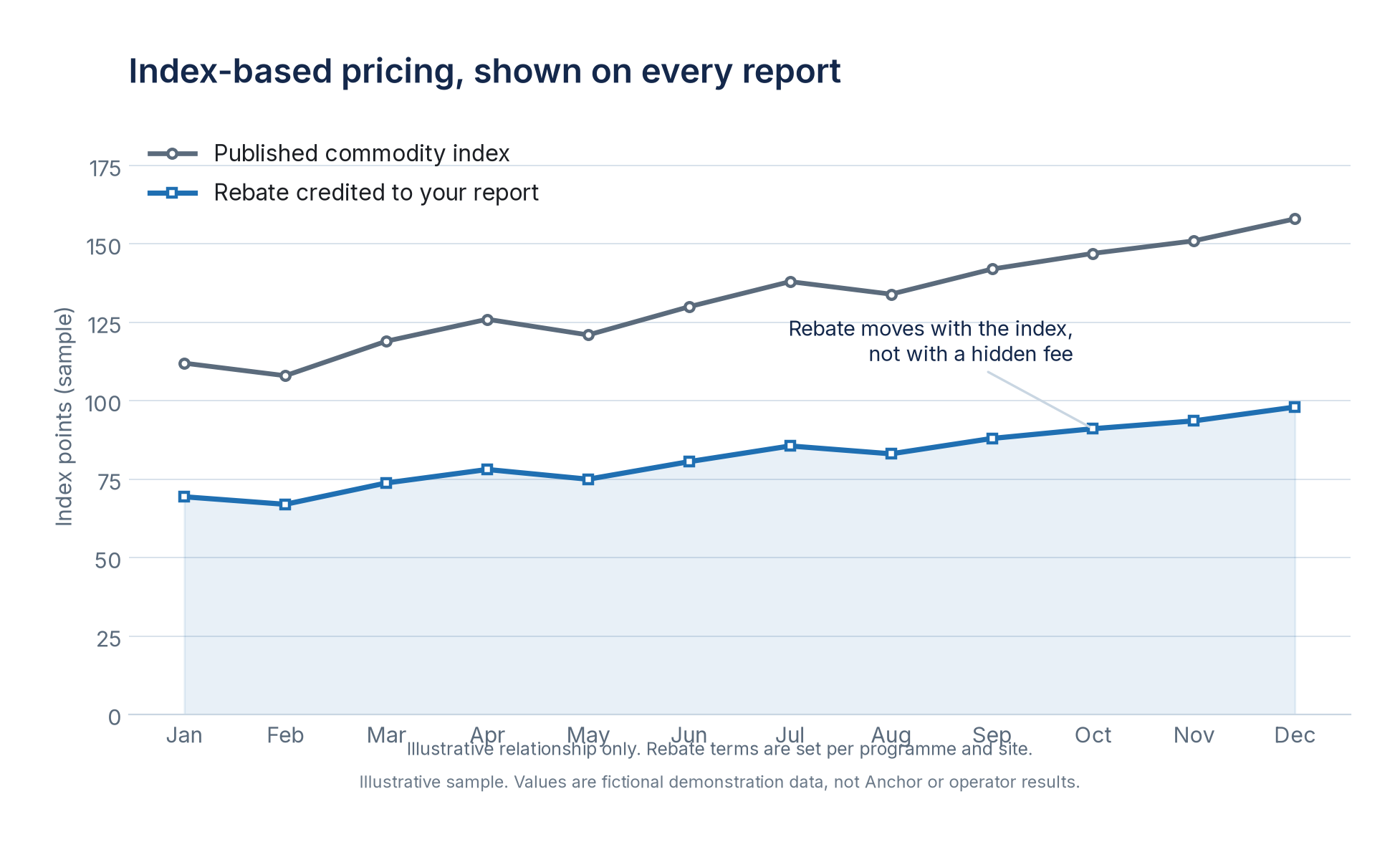
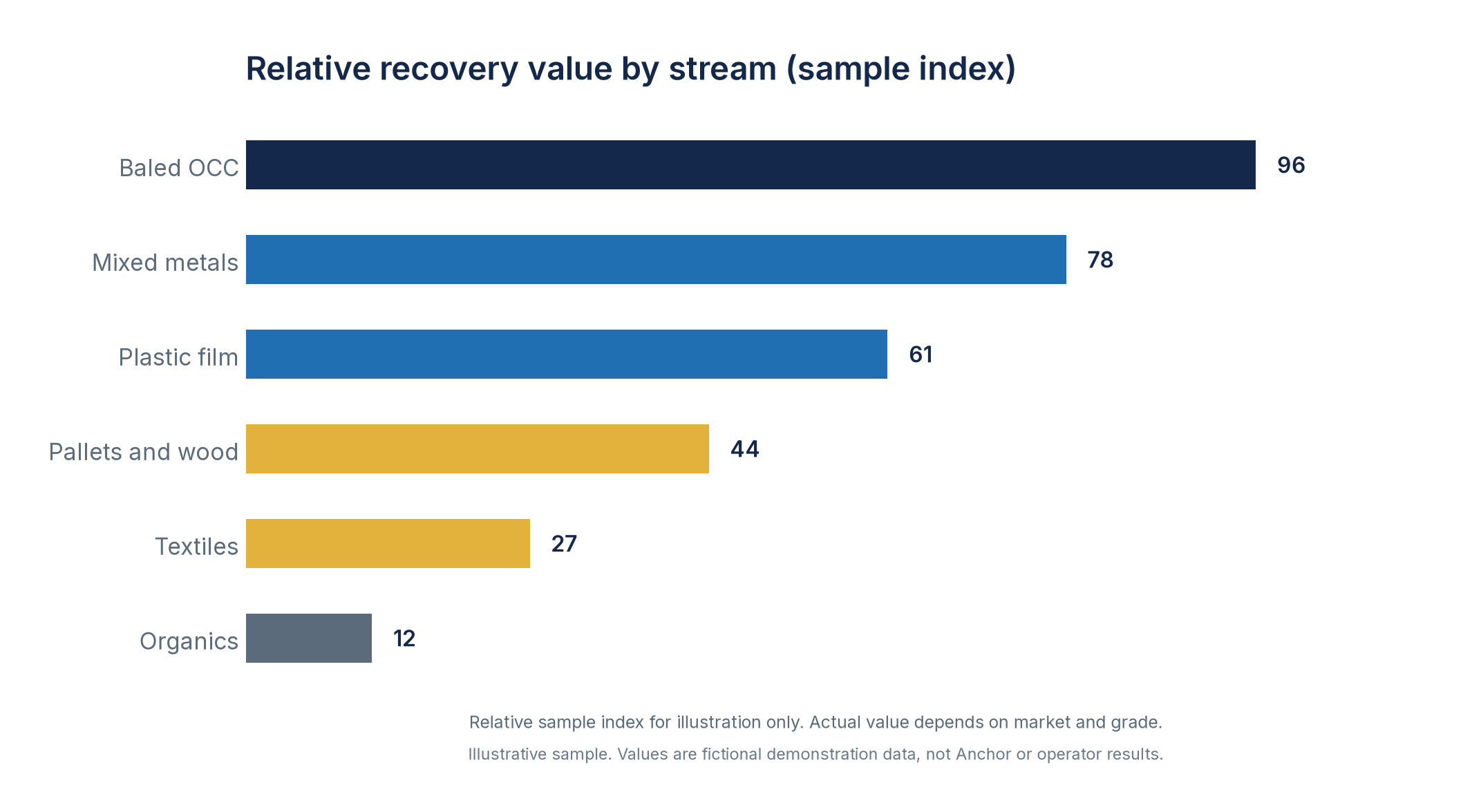
Economics may reflect grade, actual weights, transport, preparation, local outlet terms and a published index where used. Some streams require a charge, and a rebate is not guaranteed.
Your agreement identifies the pricing period, deductions and any agreed adjustments. Reporting distinguishes value, charges and material-specific differences rather than assuming a blended result.


Cardboard recycling for businesses and paper recovery.
Cardboard recycling rebates depend on grade, condition, transport and market terms. Your agreement identifies the published index, pricing period and deductions. A positive rebate is not guaranteed for every site or grade.

Shrink wrap and pallet wrap recycling.
Clean plastic film is kept separate from food residue, labels and incompatible materials. Your operator specifies the accepted grade, preparation and collection method. Contamination is reported rather than hidden in an unexplained adjustment.

Wood pallet recycling programs.
Reusable customer-owned pallets can follow recovery rules. Broken pallets and wood are evaluated for the permitted outlet. Pooled pallets remain the owner's assets and follow authorized return procedures.

Metal recovery.
Separate metals by the agreed grade and keep regulated or contaminated components out of the general stream. Weights and published-index terms show how any value or charge is calculated.

E-waste recycling for businesses.
Electronics require handling rules for batteries, data-bearing components and downstream outlets. Required operator credentials and data-destruction evidence are verified for the program rather than assumed from a recycling certificate.

Textile recycling programs and apparel recovery.
Your program distinguishes reuse, fiber recovery and destruction. Brand restrictions and material composition guide the outlet. Do not call every textile shipment recycled without a supported final destination.

Foam recycling.
Foam type, density, contamination and available outlets affect feasibility. Your assessment confirms whether a collection and recovery path is practical for the site.
Appliance recycling programs.
Appliances may contain refrigerants, batteries or other regulated components. Operators must meet the relevant handling and recovery requirements before material is routed.

Mattress recycling programs.
Mattresses require separation from other bulky materials and an outlet review for the mattress components. Your assessment confirms local handling requirements, condition limits and the available disposition path.

Organics and hard-to-recycle streams.
Food and organics need contamination controls, timely service and an appropriate local destination. Specialty streams receive a separate outlet review. Worldwide programs follow the laws of each jurisdiction, including any cross-border restrictions.


Resources for your next decision.
Cardboard recycling rebates for businesses: how index-based pricing works
Learn how cardboard recycling rebates use market indexes, quality rules, and clear records so multi-site teams can budget with confidence and act.
Read the guide Material recoveryShrink wrap and pallet wrap recycling for distribution centers
Recover clean stretch film across distribution sites with practical controls, records, and buyer-ready guidance for stronger material recovery. Start here.
Read the guideClear answers
What you should know.
Will every stream generate a rebate?
No. Some streams carry collection or processing charges. Published indexes, agreed deductions and outlet availability determine the economics. Your report separates value from cost.
What weight units do reports use?
The website's program examples use pounds. Your program defines the reporting basis and documents any conversion needed for local records.